
CYANO
Cyanotype Photos
Not a blue filter.
The chemistry.
A cyanotype is the oldest surviving photographic process. Paper brushed with iron salts, a negative laid on top, left out in the sun. What develops is Prussian blue, washed out in plain water. It is where the word blueprint comes from.
CYANO does that chemistry in software. Not a colour swap tuned by eye, but the sensitiser's ultraviolet response integrated against sunlight across the spectrum, and Prussian blue built up through the Beer-Lambert law. No darkroom, no chemicals, no printer.
Download on the App Store FreeNo subscription · No account · Nothing leaves your phone
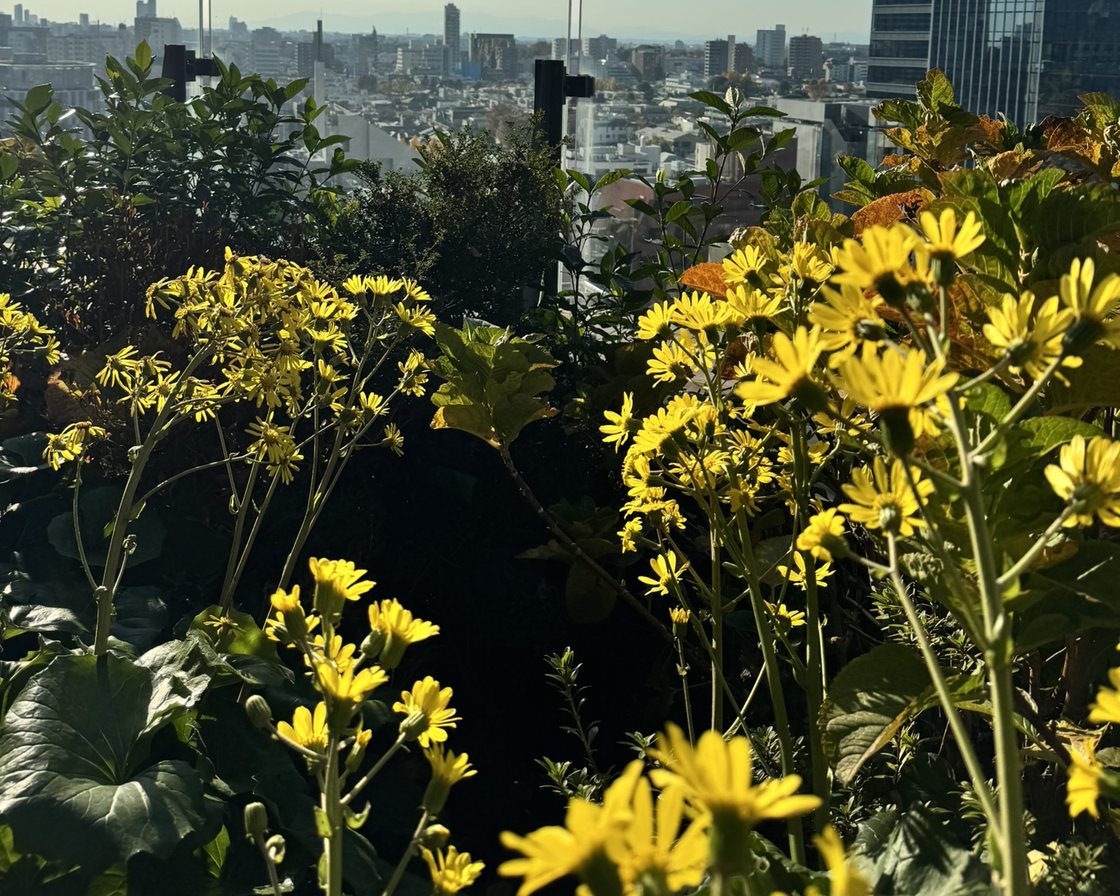
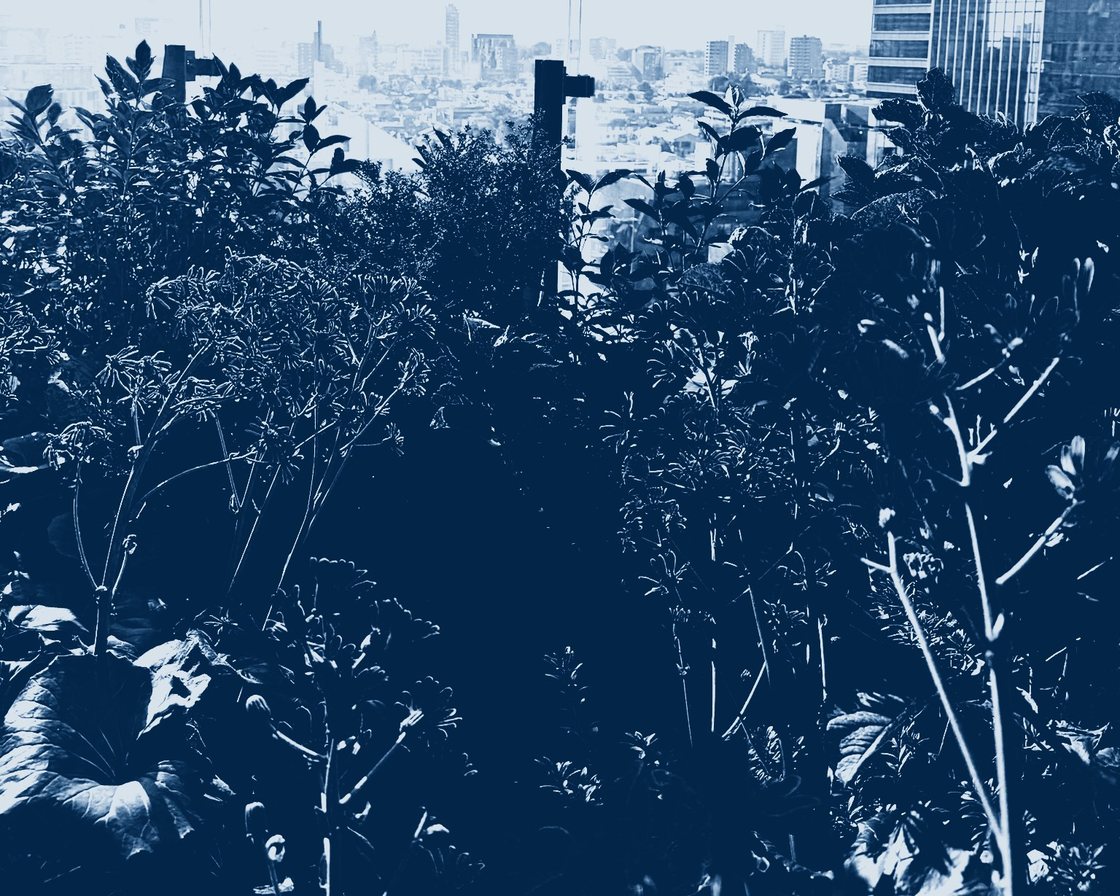 Photograph
Cyanotype
Photograph
Cyanotype
Why it looks like that
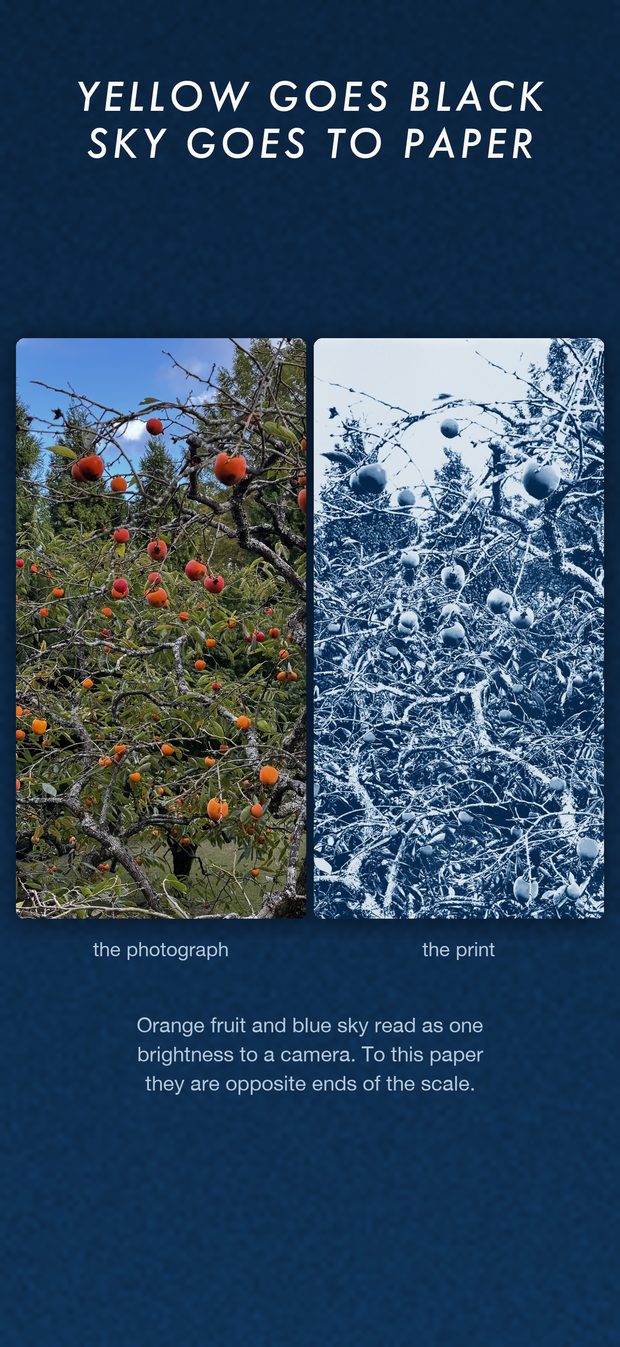
The paper cannot see most of your photograph.
Cyanotype paper is blind to red and green. It responds only to ultraviolet and the deepest blue, which means it reads a scene at completely the wrong brightness, and that is the whole point of it.
Look at the picture above. To the camera, those yellow flowers and that sky are the same brightness: measure them and the flowers come out at 177, the sky at 165. You could not tell them apart in a black and white conversion.
On the paper they end up at opposite ends. The flowers fall to 69 and the sky rises to 225, because yellow carries almost no light this sensitiser can use while the sky is carrying more than the sheet can hold. Nothing was adjusted to make that happen; it is what the chemistry does.
Two colours your camera recorded as equally bright come out at opposite ends of the print.
A filter cannot get there. A filter is a list somebody wrote down in advance, so it can make a photograph blue, but it has no idea which blue was carrying ultraviolet. That is the difference between something that looks vaguely antique and something that looks like it came out of a tray.
What is actually being computed
Built from the physics, not from a preset.
Every colour on your screen is three numbers. Those three numbers do not say how much ultraviolet a thing reflected, and ultraviolet is the only part this process cares about. So the model reconstructs the smoothest full spectrum consistent with the colour you photographed, then reads the part of it the sensitiser can actually see.
That spectrum is integrated against the sensitiser's action curve and the solar spectrum to get an exposure. The exposure runs through a tonal curve derived from the photochemistry rather than drawn by hand. The resulting Prussian blue is built up by the Beer-Lambert law, including the way the pigment clumps at high concentration, without which the deep tones stall at an unconvincing electric blue.
It also reads each photograph before printing it, the way a printer reads a negative and makes a test strip, so the exposure suits the picture in front of it rather than some imagined average one.
The controls
Four dials, and every one of them is real.
- Sun
- How long the sheet was left out. Overexpose it and the shadows merge into one mass, the way they really do.
- Paper
- Cotton rag, rough watercolour, or buff. The base colour shows through everywhere, because in this process the paper is part of the picture.
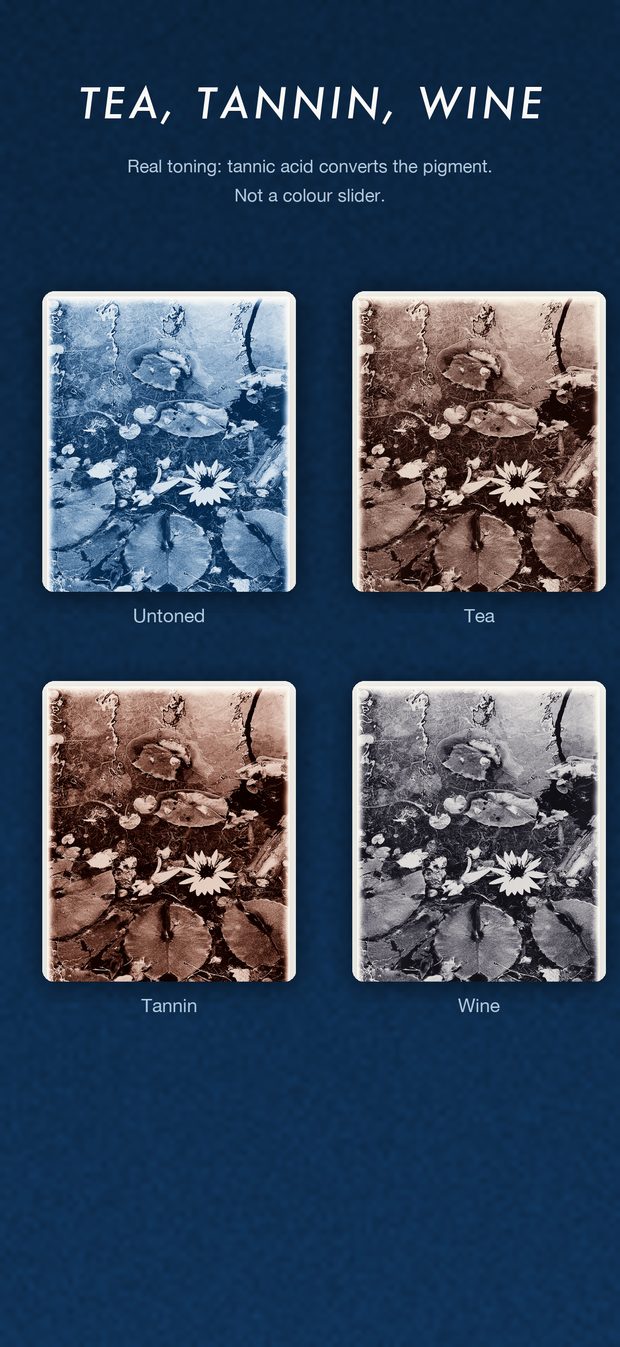
- Toning
- Tea, tannin or red wine. These convert the Prussian blue into iron tannate rather than tinting it, which is why a toned print reads as another process instead of a recoloured one.
- Brushed edge
- The uneven coating of a hand-brushed sheet, seeded per photograph, so two prints of the same picture are never quite the same.
On your phone
Simple in front, heavy underneath.
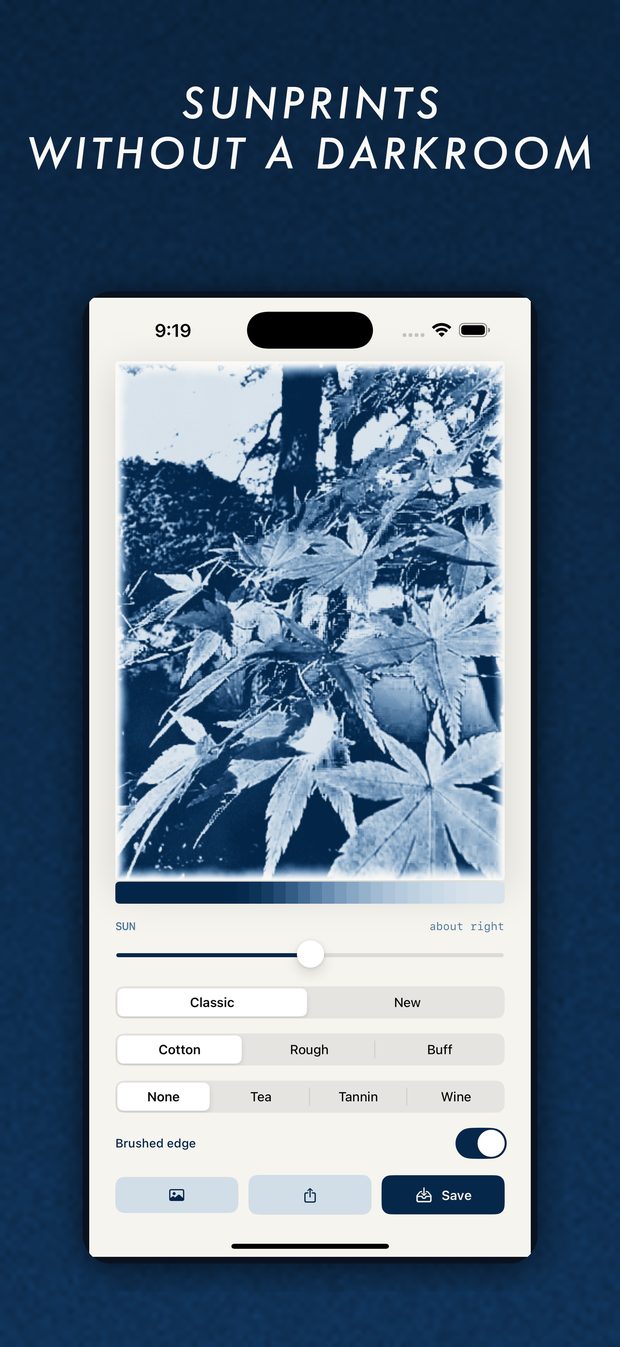
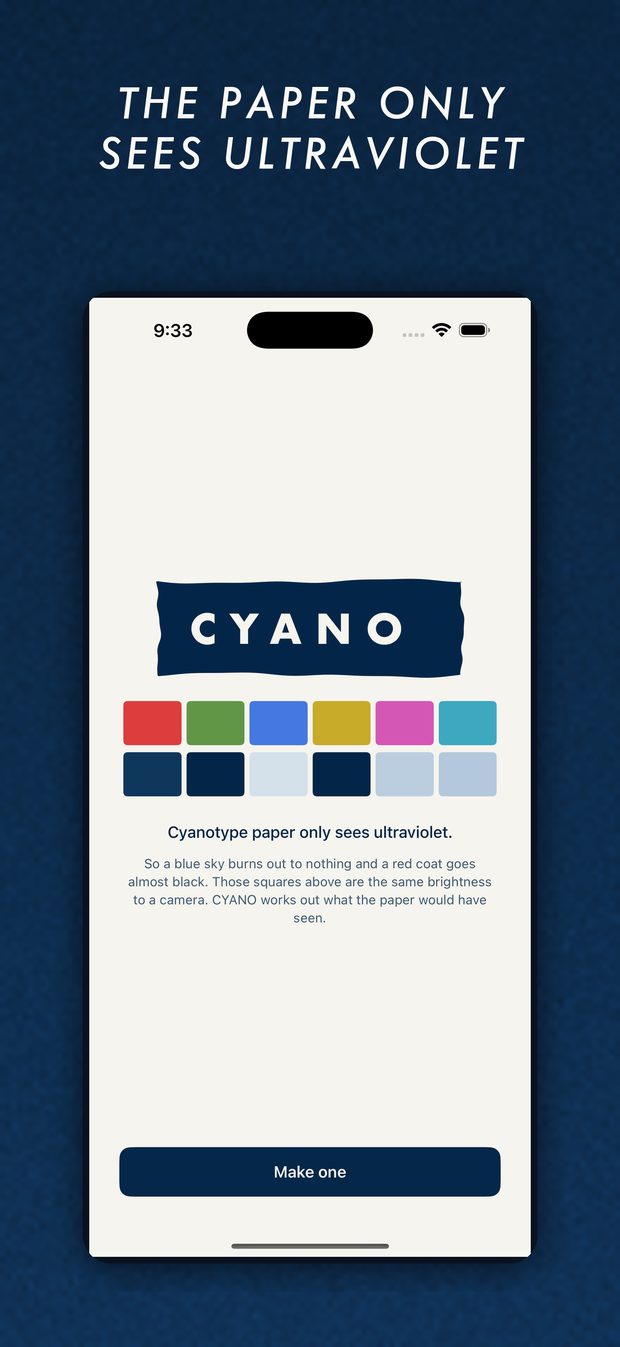
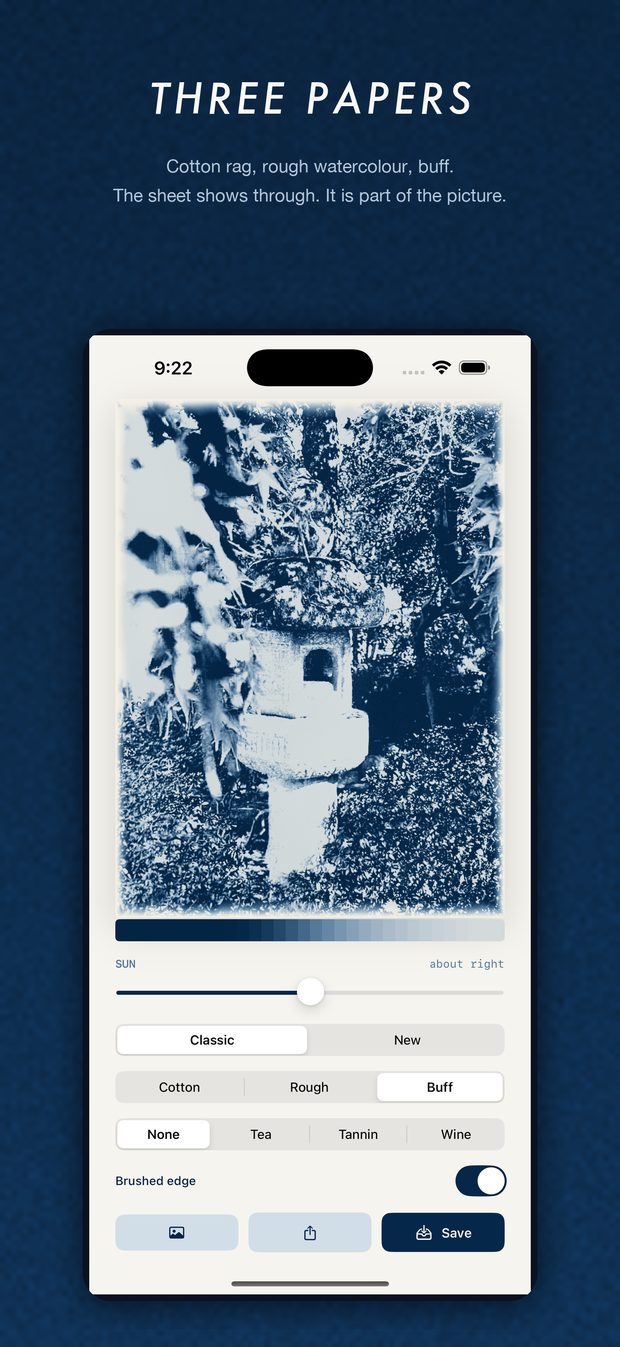
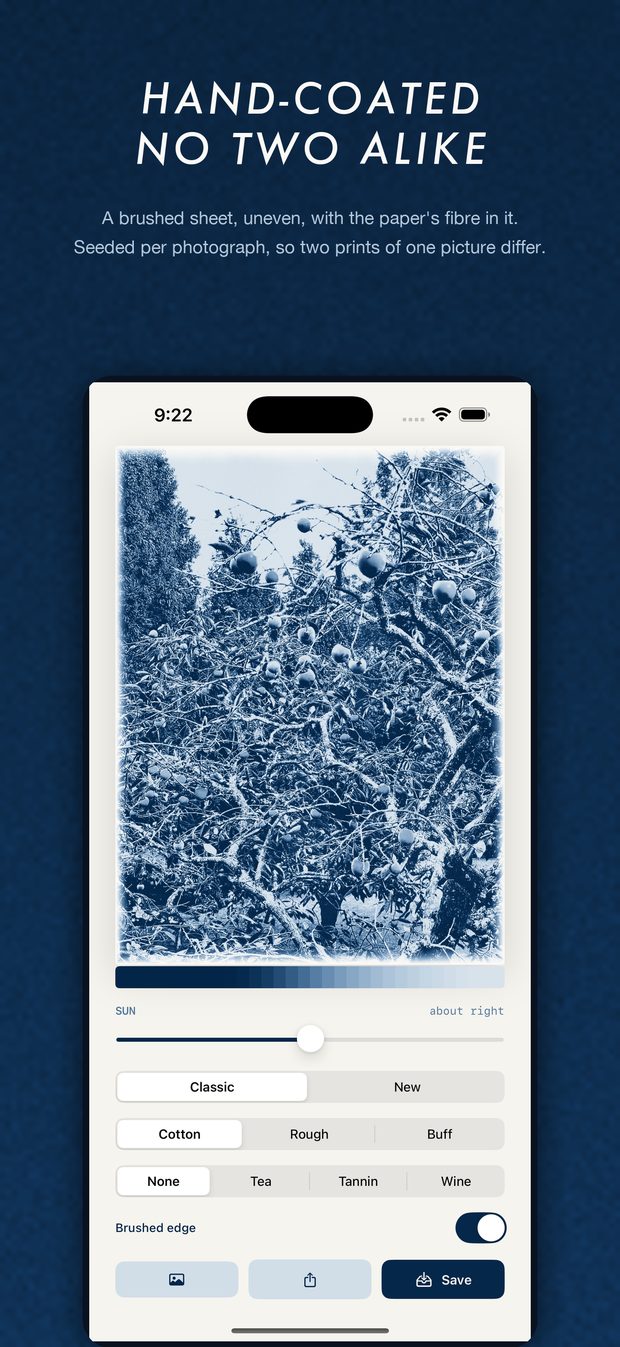
Choose a photograph and it develops. Move the sun, change the paper, drop it in a toning bath. Save at full resolution with nothing stamped on it.
Common questions
Questions
What is a cyanotype?
A cyanotype is the oldest surviving photographic process, invented in 1842. Paper is brushed with iron salts, a negative is laid on top, and it is left in the sun. What develops is Prussian blue, washed out in plain water. It is the reason old engineering drawings are called blueprints.
Do I need chemicals, paper or a printer?
None of them. CYANO exists so that people who could never set up a darkroom, buy sensitiser or wait for a sunny afternoon can still make cyanotypes.
Is this a filter?
No. A filter decides in advance what each colour becomes. CYANO works out how much ultraviolet each colour was actually carrying and builds the pigment from that.
What does it cost?
The app is free and completely usable: unlimited prints, full resolution, no watermark. One optional purchase of $4.99 unlocks the three toning baths, the other two papers and the second sensitiser formula. There is no subscription.
Does it collect anything?
No. No account, no analytics, no server, and no networking code of its own. Photographs never leave your phone. The privacy policy is one page and says so.
Make one.
Free, and the free version is the whole simulation. Nothing is watermarked and nothing is held back to make a point.
Download on the App Store FreeAlso by Levi Foster
Two more that work the same way.
- FRMT: Film Simulation
- A camera that models the film itself: light scattering through the emulsion, dye layers holding each other back, grain forming where the light landed.
- MODUL8: Glitch Art Effects
- Twenty-nine stackable effects for photos and video, each modelled on a specific way real hardware used to fail. Free, with optional Premium.